Before There Were Birth Charts, There Were Circles: Rediscovering the Zodiac as America's Everyday Sacred Geometry
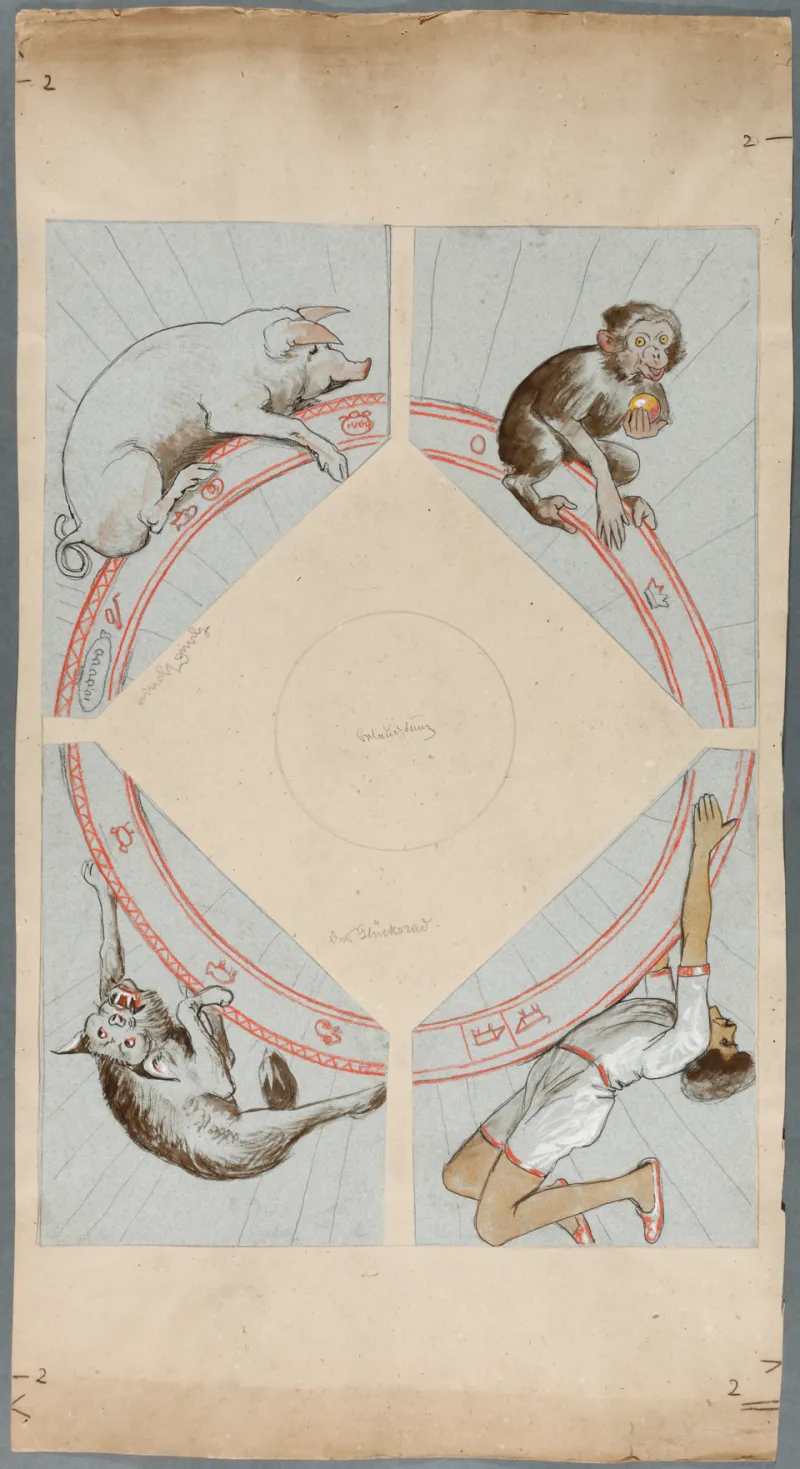
Photo: Hans Thoma, PDM-owner, via Wikimedia Commons
Somewhere in America right now, someone is scrolling their Co-Star notifications, squinting at a wheel divided into twelve slices, and feeling — even if they wouldn't say it out loud — a strange sense of order. That wheel is doing something older and deeper than horoscopes. It's doing what mandalas have done for millennia: holding chaos inside a circle.
The Wheel You Already Own
Ask most people to draw a mandala and they'll hesitate. Ask them to picture their birth chart and they can see it instantly — that round diagram with the rising sign on the left, the planets scattered like beads, the whole life mapped as a circle. Astrology, for all its baggage, handed the modern West its most accessible sacred geometry. You don't need a temple, a sand tray, or a guru. You need a birthday.
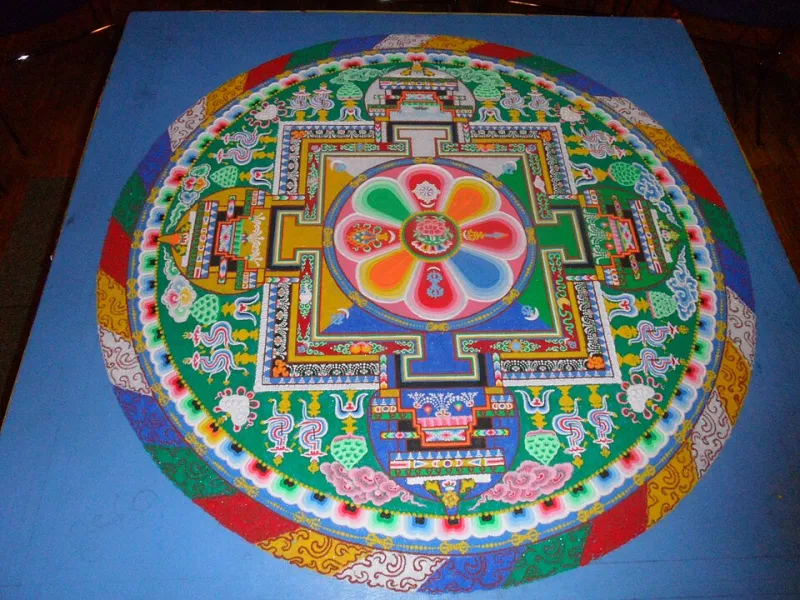
Historically, the connection isn't a stretch. Tibetan monks construct sand mandalas as maps of the cosmos; medieval European astrologers painted zodiac wheels on cathedral ceilings for the same reason. Both traditions understood that a circle with everything in its place is a comfort the rectangular mind can't quite explain. The zodiac wheel is, functionally, a mandala you can order merch for.
"The Chart Is a Mirror, Not a Cage"
I called two astrologers who've started incorporating actual drawing into their client work — a trend that's quietly growing in the American wellness scene.
"People come in wanting answers, wanting the chart to tell them what to do," says Dana Okafor, an astrologer in Asheville, North Carolina, who hands clients colored pencils during readings. "So I have them draw their own wheel first. Freehand. It's always lopsided. And that's the point — the professional chart is perfect, and your version is human, and both are true."
Okafor calls the practice "chart journaling," and she's noticed something consistent: clients who draw their charts become less attached to predictions. "The circle stops being a cage when you're the one holding the pen."
Marisol Vega, who runs a small practice in Austin, takes it further. After every new moon, she sketches a wheel, writes what she's releasing around the rim, and fills the slices with images instead of planets. "I stole the structure from mandala practice, honestly," she laughs. "Astrology gave me the map. The drawing taught me to let go of it."
The Paradox of the Fixed Wheel
Here's the tension worth sitting with: a birth chart never changes. Your sun, your rising, your Saturn return — fixed at the moment you took your first breath. That's the opposite of impermanence. And yet the astrologers I spoke with insist the fixed wheel is precisely what teaches release.
"A mandala in sand gets swept away," Vega says. "A birth chart can't be swept away, so people cling to it — 'I'm a Scorpio, this is just how I am.' Drawing the wheel yourself, badly, by hand, breaks that spell. You realize the circle is a snapshot, not a sentence."
In other words: the zodiac mandala shows you the shape of a moment. The letting go comes when you stop mistaking the snapshot for the whole movie.
Try It: Drawing a Release Wheel
Want to test this yourself? The next new moon — or honestly, any random Tuesday — try this twenty-minute practice borrowed from both traditions:
- Draw a circle. Imperfect is fine. Imperfect is encouraged.
- Divide it into twelve slices, like a clock face or a chart. No astrological knowledge required.
- In each slice, write one thing you're ready to release — a grudge, a subscription, an opinion about your cousin's kitchen remodel.
- Fill the slices with color or pattern, letting the writing get partially covered. The release doesn't disappear; it becomes part of the design.
- Sit with the finished wheel for two minutes. Then — this is the part that matters — fold it, shred it, or tuck it in a drawer. The wheel was never meant to be permanent.
One Circle, Many Names
Whether you call it a mandala, a chart, or a doodle on a napkin, the impulse is the same: we draw circles when we need to feel held. Astrology just happens to be the doorway most Americans walk through first. There's no shame in that doorway. The monks sweeping sand in Tibet and the teenager checking her Mercury retrograde in a Ohio diner are, in some quiet way, doing the same thing — looking at a circle and asking it to make sense of the mess.
The good news? The circle doesn't answer. It just holds the question, beautifully, until you're ready to let it go.