Five Circles, One Afternoon: A Field Test of Errand-Based Enlightenment
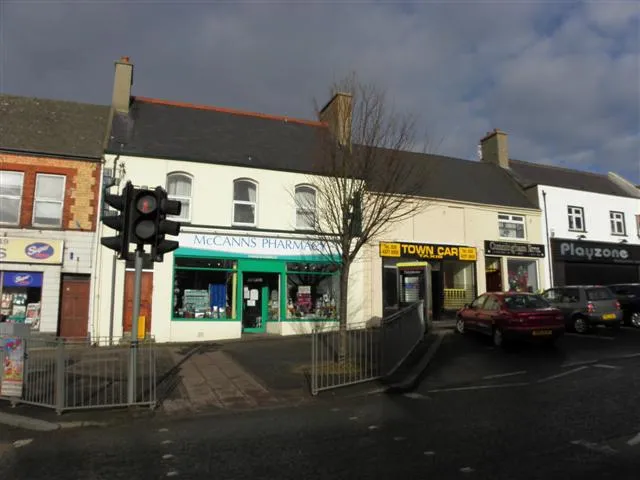
Photo: Kenneth Allen , CC BY-SA 2.0, via Wikimedia Commons
Somewhere between the drive-thru pharmacy and the laundromat on Main Street, I had a thought that felt mildly heretical for someone who writes about mindfulness: maybe we don't need meditation retreats. Maybe we need errands.
Not the frantic kind—the kind where you're idling, waiting, circling. America is quietly full of circular architecture that forces us to pause, and I wanted to know what happens if you actually pay attention to it. So last Saturday, I made a list of five everyday circles within a mile of my house and visited them all in one afternoon. Here's what I found.
Circle One: The Pharmacy Drive-Thru Window
The round window at my local CVS is maybe two feet in diameter, framed in beige plastic, and honestly not much to look at. But there's something about the ritual of it that deserves a second glance. You pull up. You stop. You wait.
That waiting is the whole practice. There's nowhere to go, nothing to scroll productively. You're in a sealed bubble with a speaker and a circular window, and the pharmacist on the other side becomes, briefly, the only person in your world. When the little drawer slides out with your prescription, it feels weirdly ceremonial—like an offering exchanged at a very small shrine.
I sat there an extra thirty seconds after receiving my allergy meds, engine off, just breathing. The window stayed round. I stayed still. It was the best two minutes of the errand.
Circle Two: The Revolving Door at the Public Library
Revolving doors are the closest thing most Americans have to a walking labyrinth. You enter, the world rotates around you, and for four or five steps you are in transit between outside and inside—a threshold with no other purpose than transition.
The library's brass-trimmed revolving door creaks and resists, which slows you down whether you like it or not. Medieval labyrinths were built into cathedral floors so pilgrims could walk a winding path as a moving prayer. A revolving door is not a cathedral. But the impulse—move in a circle, arrive changed—is the same. I tried walking through it slowly, deliberately, and came out the other side feeling genuinely rearranged. Or maybe that was the air conditioning. Either way.
Circle Three: The Laundromat's Front-Load Washer
There's a laundromat on the corner of 5th and Oak with a wall of front-loading machines, and if you've never watched one, you should. The porthole window fills with water, your clothes tumble in a slow rotation, and suds spiral in patterns that would be right at home on a sand painting.
Buddhist monks spend days creating intricate sand mandalas, then sweep them away to demonstrate impermanence. A wash cycle is the laundromat's version: twenty-eight minutes of swirling, and then it's gone. Drain. Spin. Done. You cannot rush it, and you cannot keep it. You can only watch.
I brought a paperback but didn't open it. The machine was better company.
Circle Four: The Round Postal Window
Our post office still has one of those old curved-glass windows with a half-moon brass slot for passing packages through. The line on a Saturday is famously long, which is exactly why it made my list. Long lines are the ultimate test of whether your mindfulness practice survives contact with reality.
Here's what I noticed: everyone in line was doing the same thing—shifting weight, checking phones, sighing. Nobody was present. I tried a simple experiment: instead of calculating how many people stood between me and the counter, I focused on my breath for one full inhale and exhale per person ahead of me. Eleven people. Eleven breaths. The line moved at exactly the same speed, but I arrived at the window as a different version of myself. The clerk, to her credit, said my package was very well taped.
Circle Five: The Convex Mirror in the Parking Garage
My final stop was the least glamorous: the convex safety mirror bolted to the ceiling of the parking garage, the one that shows you the whole floor in a fish-eyed curve. Convex mirrors bend the world into a sphere. Stand under one long enough and you notice how much you normally miss—corners, edges, other people moving through the same space.
Mandala art traditionally represents the whole universe in a single circle. A $12 parking garage mirror does a scrappy, industrial version of the same thing: everything, all at once, contained in a curve. I stood under it for a minute, watched a stranger hunt for their car in the reflection, and felt oddly connected to the whole operation.
The Case for Circular Errands
Here's my takeaway from the field test: the pause is already built into your day. The drive-thru window, the revolving door, the spin cycle, the slow line, the mirror on the ceiling—these are invitations disguised as inconveniences. Ritual doesn't require incense or an app subscription. Sometimes it requires a prescription pickup and a willingness to sit in your parked car for ninety extra seconds.
The monks who draw sand mandalas will tell you the point was never the finished circle. It's the attention you paid while making it, and the grace with which you let it go. An errand works the same way. The pharmacy run was never the point. The stillness at the round window was.
So here's my modest proposal: pick one circle in your town this week. Any circle. Pull up, stop, and breathe before you go. The errand will still be there. But so will the pause—and unlike the line at the post office, it never gets longer.