What Your Junk Drawer Is Trying to Tell You: A Spring Ritual in Chaos and Circles

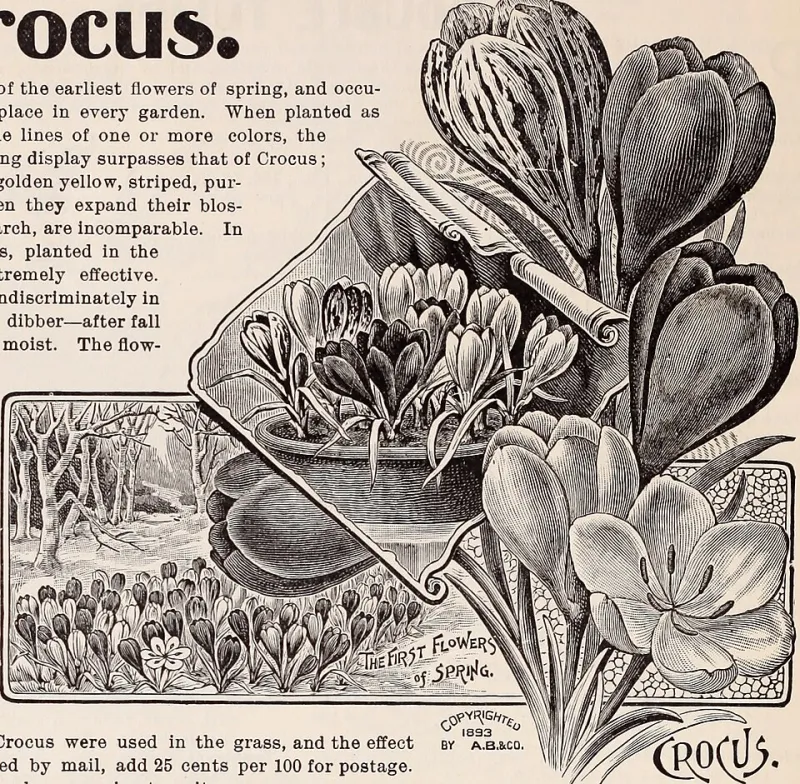
Photo: Lucas Cranach the Elder, CC0, via Wikimedia Commons
Every house in America has one. Not the same drawer, technically — sometimes it's the one next to the fridge, sometimes it's a basket masquerading as a drawer — but the same energy: the junk drawer.
Mine currently holds three dead AA batteries, a rubber band collection with no leader, a phone charger that fits nothing I own, two birthday candles shaped like the number 4, a single chopstick, and a key. Not a key to my house. A key to some door I no longer remember.
If you asked me to explain my mental state in object form, I could not do better than that drawer.
The Drawer as a Portrait of the Mind
Here's the thing about a mandala: it's a circle where every element has a place, radiating out from a center. Everything visible, nothing buried, nothing lost. A junk drawer is the anti-mandala. It's a rectangle of pure avoidance — the physical home of all the decisions we've deferred.
And that's why it's such a gift, honestly. You don't need a meditation app to take inventory of your inner clutter. You have one already, wedged next to the silverware.
The Tibetan monks who create sand mandalas spend days placing millions of grains in precise patterns, and when they finish, they sweep it all away. The point was never the finished product. The point was the attention. So what if our grains of sand are batteries and soy sauce packets? The practice works the same.
The Junk Drawer Mandala Ritual
Spring cleaning season is basically the American new year — we get the urge to reset right around the time the garage becomes usable again. Here's how to turn that impulse into something a little deeper than a trip to The Container Store.
Step one: Empty it completely. Take everything out and put it on a table or the kitchen floor. All of it. Feel the weight of the drawer in your hands. Notice how much lighter it is now. Sit with that for a second.
Step two: Sort by feeling, not function. This is where it stops being organization and starts being reflection. Pick up each object. Keep-pile, toss-pile, and — the important one — the why-do-I-even-have-this pile. That third pile is where the good stuff lives. The key to nothing. The charger for a phone you recycled in 2019. Each one is a tiny monument to a decision you never made.
Step three: Build the circle. Now, instead of shoving everything back, arrange what remains in a radial pattern. Batteries in a ring. Rubber bands fanned like petals. The scissors at the center, pointing out like compass needles. It doesn't need to be beautiful — it needs to be intentional. Every object placed, not dropped.
Step four: Admire, then let it go. Take a photo, because you'll want proof this happened. Then return the items to the drawer — still sorted, but back to being a drawer, because this is a real kitchen in a real house.
What You'll Notice
People who try this tend to report the same strange side effect: the drawer stops bothering them. Not because it's perfect, but because they've seen it. There's a big difference between a drawer full of stuff and a drawer full of stuff you've consciously chosen.
That difference is the whole practice, isn't it? The clutter in the drawer and the clutter in the head work the same way. Neither gets better by being ignored. Both get lighter the moment you finally look at them, item by item, and decide what stays.
The monks sweep away their mandala. We close our drawer. Same teaching, different kitchen.
Your inner life might be a junk drawer. That's fine. Junk drawers can be mandalas too — one deliberate battery at a time.