Take a Number, Find Your Center: The DMV as America's Most Unlikely Meditation Hall
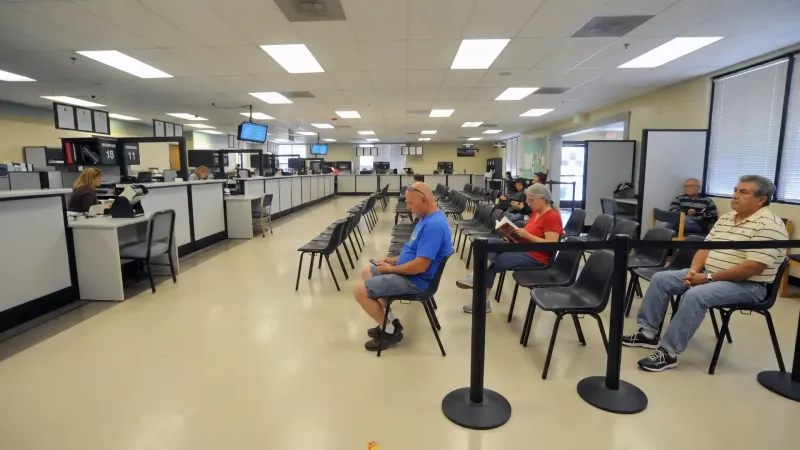
Photo: DMV waiting room chairs fluorescent light government office queue, via mainorwirth.com
There's a moment — usually around minute forty of a DMV wait — when something in you either breaks or softens. You've read the pamphlet about organ donation twice. You've memorized the safety poster. You've watched a man argue about a smog certificate with the patience of a saint and the volume of a foghorn.
And then, if you're lucky, something shifts. You stop fighting the line. You just... sit in it.
Congratulations. You've accidentally stumbled into a meditation retreat that costs $38 and requires proof of residency.
The Waiting Room Nobody Asked For, and Everybody Needs
Let's be honest: nobody seeks out the DMV. We go because our license expired, because we moved to a new state, because the renewal notice has been living under the magnet on the fridge since spring. It's a civic obligation wrapped in fluorescent lighting.
But here's the thing about places we don't want to be: they strip away illusion fast. The DMV doesn't care about your inbox, your step count, or your brunch reservation. It hands you a paper ticket with a number and says, essentially, be here now — the exact instruction every meditation teacher since the beginning of time has been trying to get across.
The Zen tradition has a phrase for this kind of involuntary stillness: it's the practice of sitting with what is. The DMV just happens to offer an extended session, no incense required.
Look Closer: The Room Is Already a Mandala
At Mandala Net, we believe the circle is where the mind finds its footing — and once you start looking, circular patterns are everywhere in these spaces.
Consider the architecture. County courthouses and municipal buildings across America love a rotunda: a domed, round central hall where light pours down and everything orients around a still center. Even the DMV itself is often a study in geometry — the stanchion maze that snakes your queue into neat concentric switchbacks, the service windows arranged in an arc, the digital counter cycling numbers like a slowly turning wheel.
A mandala, at its heart, is a diagram of order within apparent chaos. Every element has a place; every path eventually leads to the center. Sound familiar? You take a number. You follow the maze. You arrive, eventually, at window 7. The whole room is a bureaucratic mandala, and you are already inside it — you just haven't been looking.
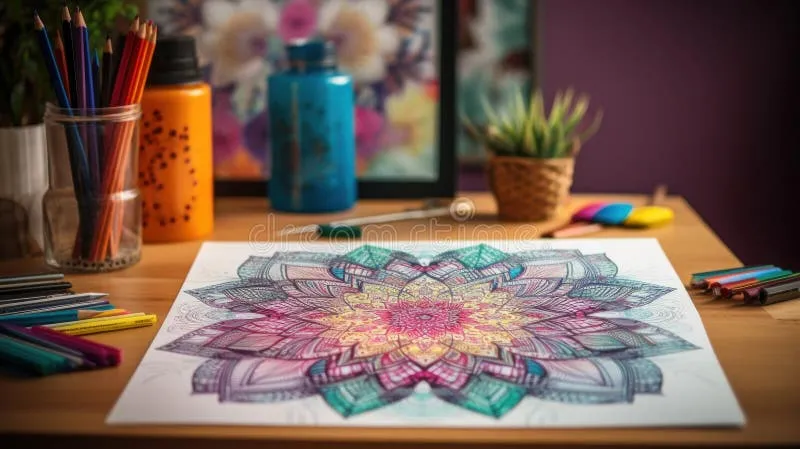
Next time you're in one of these spaces, try this: pick out the circles. The ceiling tiles, the round clock above the counter, the carousel of the airport baggage claim across town, the revolving door at the entrance. Your attention, given a pattern to rest on, settles. This is the same mechanism behind sand mandalas, rose windows, and those adult coloring books flying off shelves at Target. Pattern recognition is a shortcut to calm.
The Practice: Bureaucratic Breathing
Here's a simple technique you can deploy on your next government errand. Call it bureaucratic breathing. It requires no equipment, no app, and no one will even know you're doing it.
Step 1: Take the ticket. Take the seat. Take the breath. Once you're seated, don't reach for your phone. Not yet. Give yourself three full breaths first. In through the nose, out through the mouth. Feel the plastic chair. You're here. That's the whole assignment.
Step 2: Ride the number. The counter calls B-47, then B-48. Instead of dreading your number, treat each called number as a bell. Monasteries use bells to bring meditators back to attention; the DMV gives you a robotic voice announcing "B-49, window 3." Same function, worse acoustics. Every call is a reminder to return to your breath.
Step 3: Breathe in shapes. Try a simple square breath — in for four counts, hold for four, out for four, hold for four. There's a pleasing irony in using a geometric shape to stay sane inside a geometric queue. If squares feel stiff, picture a spiral instead: each exhale winds inward, each inhale eases back out.
Step 4: Soften the story. At some point, the mind will start its greatest hit: this is taking forever, I picked the wrong day, the woman at window 2 is moving in slow motion. Notice the story. Label it "waiting." Then return to the breath. This tiny act — noticing, labeling, returning — is the entire core of mindfulness practice. The DMV is just the classroom.
Step 5: End with gratitude, weirdly. When your number finally comes up, take one breath before standing. You just completed a 45-minute sit that most people pay for. That's worth a quiet nod to yourself.
The Real Lesson: The Center Was Never at the Front of the Line
There's a deeper point hiding under all this, and it's one the mandala tradition has been teaching for centuries: the center isn't a destination you reach by pushing ahead of everyone else. It's available wherever you happen to be standing — or sitting, in a molded plastic chair, next to a vending machine that only takes exact change.
We spend so much of American life trying to skip the wait. Expedited appointments, curbside everything, the express lane. And there's nothing wrong with efficiency. But the wait keeps showing up anyway — at airports, at the pharmacy, at the Secretary of State office in Michigan or the DMV in California. The wait is a feature, not a bug. It's one of the few universal experiences left, and like it or not, it's a doorway.
So the next time you're handed a paper ticket and pointed toward the stanchions, consider that you haven't been sentenced. You've been handed a session. The room is circular, the numbers turn like a wheel, and your breath is free.
Take a number. Find your center. They're not mutually exclusive.