Twenty Minutes in Warm Water: A Floating Mandala Ritual for the Chronically Fidgety
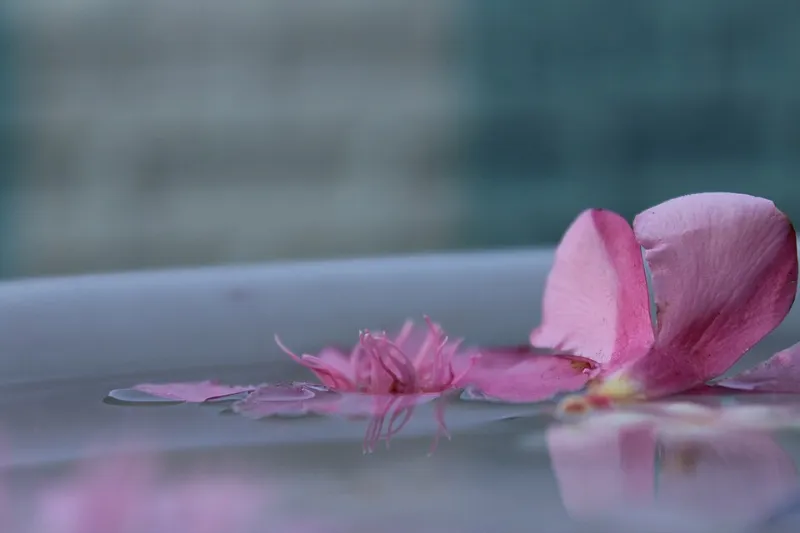
Photo: Akash.nakka, CC BY-SA 4.0, via Wikimedia Commons
Let's be honest about something the wellness industry doesn't love to admit: most people hate meditating. Not the idea of meditating — the sitting. The stillness. The part where your left foot falls asleep and your brain starts drafting a grocery list at minute four.
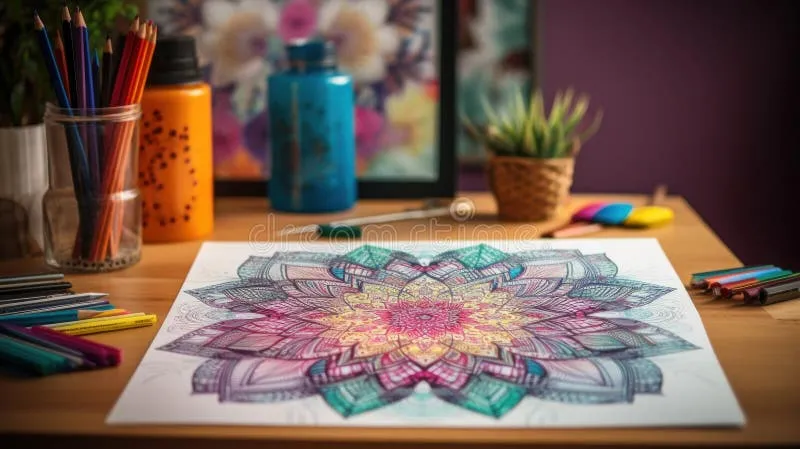
But here's the thing about mandala practice that gets lost when it's presented as a cushion-and-incense affair: the mandala was never really about sitting. Tibetan monks spend days bent over sand. Mosaic artists stand at tables for hours. The circle asks for your attention, not your posture.
Which means the most underused meditation space in America might be sitting right there in your bathroom.
Why Water Changes Everything
There's a reason every culture with a ritual tradition put water at the center of it — baptisms, mikvahs, the Ganges, Japanese onsen. Water holds patterns the way nothing else does. Drop a petal on a still bath and watch it drift, rotate, and settle. That's not a metaphor. That's literally a mandala in motion, redrawing itself every second.
And unlike seated meditation, a bath gives your body something to do. You're warm, you're buoyant, you're held. The fidgety nervous system — the one that sabotages every app-guided breathing session — finally has nothing to fight against.
Gathering Your Materials
This is the fun part, and it costs about as much as a fancy latte:
- Something that floats and blooms. Flower petals are the classic — a couple of roses from the grocery store work fine. Sliced citrus (orange rounds look like little suns) floats beautifully too.
- One bath bomb. The fizz is the feature, not the fluff. More on that in a second.
- A candle or two. Dim lighting tells your brain the day is over.
- Your phone, face down, in the other room. Non-negotiable. Twenty minutes. It'll survive.
The Ritual, Step by Step
Minutes 0–5: Run the water like it matters. Don't multitask. Watch the tub fill. Notice the sound changing as the depth rises. This is the on-ramp — you're already practicing and you haven't even gotten in yet.
Minutes 5–8: Drop the bomb, watch the mandala bloom. When the bath bomb hits the water, it creates a swirling, expanding ring of color — a mandala that draws itself and dissolves at the same time. Watch it the way you'd watch the monks sweep their sand design. No effort. Just the show.
Minutes 8–14: Build your floating circle. Once the water settles, start placing petals in rings around the center of the tub. Outer ring first, then inward. There's no wrong arrangement — you're not decorating, you're noticing. Where does your eye want the center to be? Put it there. If a petal drifts loose, let it. That's the practice.
Minutes 14–20: Sink in and get still. Lower yourself in slowly. Rest your head back. Now do the only instruction of the whole ritual: follow one petal. Watch it move with the small currents your breathing creates. When your mind wanders — it will, constantly — just come back to the petal. That return is the meditation. You're not failing when you drift; you're succeeding when you notice.
The Part Where It All Goes Down the Drain
Here's the twist that makes this more than a self-care trend piece: when you're done, you pull the plug. The petals swirl, the pattern collapses, and your mandala is gone.
The monks who spend weeks on a sand mandala destroy it on purpose the moment it's finished. The point was never the finished circle — it was the attention that built it. Your bath mandala is the same teaching on a twenty-minute timeline. Nothing to keep, nothing to photograph, nothing to feel guilty about skipping tomorrow.
Just warm water, a circle that came and went, and a nervous system that finally got quiet without being told to sit still.